
COME AND JOIN OUR SUNDAY SERMON - 821 Libertas Ave, Equestria, Pretoria.

How to Read the Bible and Apply It to Everyday Life
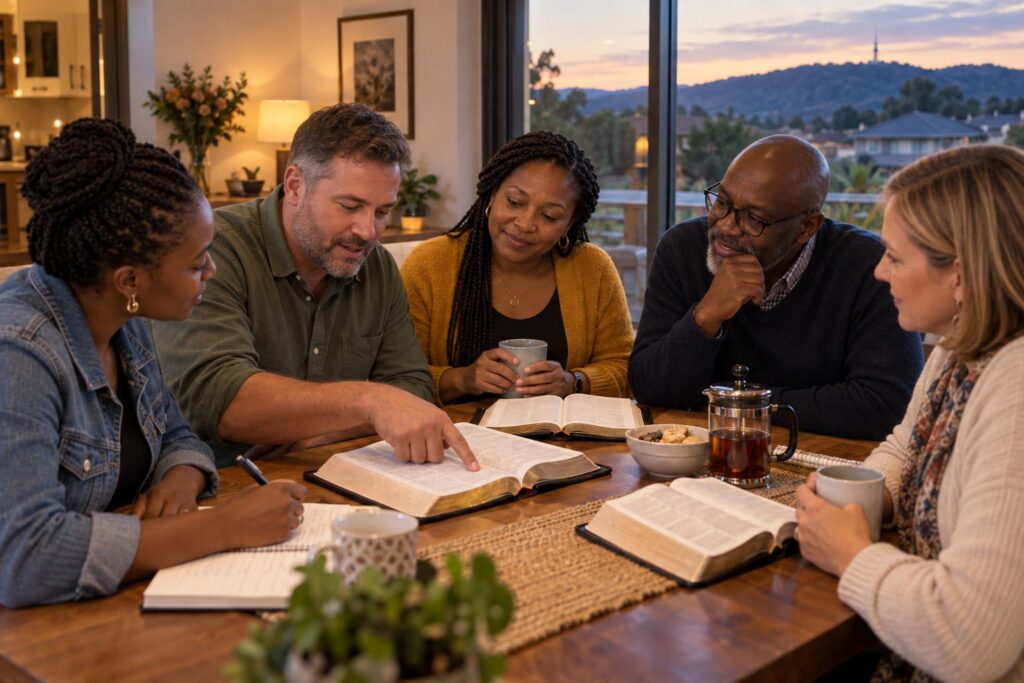
How to Read the Bible is not only to finish a chapter
You open the Bible with good intentions. A few verses later, your mind wanders. The language feels unfamiliar, the names blur together and you are unsure what any of it has to do with Monday morning.
Many people want to read the Bible but struggle to move from words on a page to truth that shapes daily life.
The answer is not to read faster or collect isolated verses. It is to slow down, understand what the passage says and respond faithfully.
Jesus compared hearing His words and putting them into practice to building a house on rock (Matthew 7:24). The strength was not in hearing alone. It was in acting on what had been heard.
Begin with relationship, not obligation
The Bible is not merely a rulebook or a source of inspirational quotations. Through Scripture, we learn who God is, what He has done, how He relates to people and what faithful life looks like.
Before you read, pause and pray:
“Lord, help me understand Your Word accurately. Show me what is true, correct what needs to change in me, and help me respond.”
This short prayer shifts the aim from completing a religious task to meeting God with humility and attention.
Choose a manageable place to begin
If you are new to the Bible, start with a complete book rather than repeatedly opening at random.
Good starting points include:
- John: to explore who Jesus is and why belief in Him matters.
- Mark: for a concise, action-filled account of Jesus’ ministry.
- Luke: for an orderly account of Jesus’ life and compassion towards people.
- Acts: to see how the early church began and grew.
- Philippians or James: for accessible teaching about Christian attitudes and actions.
Read a short section at a time. Ten attentive minutes can be more fruitful than several distracted chapters.
Use four questions to understand the passage
1. What does the text actually say?
Notice repeated words, commands, promises, contrasts and cause-and-effect statements. Who is speaking? Who is being addressed? What happens before and after this section?
Do not begin with “What does this mean to me?” Begin with “What is the writer communicating?” A passage cannot responsibly mean something today that contradicts what it meant in its original context.
2. What does this reveal about God?
Look for what the passage shows about God’s character, purposes and actions. Is He correcting, comforting, promising, warning, rescuing or calling people to trust Him?
This protects Bible reading from becoming entirely self-focused. Scripture is first about God before it becomes guidance for us.
3. What does this reveal about people?
The Bible is remarkably honest about human motives, fear, courage, pride, faithfulness, failure and need. Ask what the passage exposes about the human heart and whether you recognise a similar pattern in yourself.
4. What faithful response does this passage call for?
Application should arise from the text rather than being attached to it artificially. Your response might be:
- a truth to believe;
- a sin to confess;
- a relationship to repair;
- a command to obey;
- a promise to trust;
- an attitude to change; or
- a reason to worship.
Make the response specific. “Be kinder” is vague. “I will listen without interrupting when my spouse speaks tonight” is actionable.
Read verses in context
One of the easiest ways to misunderstand the Bible is to remove a sentence from its surrounding passage.
Consider who wrote the book, its first audience, the situation being addressed and the type of writing. Poetry uses imagery. Historical narrative describes events. Letters contain teaching written to particular communities. Proverbs express wisdom principles and should not always be treated as unconditional promises.
Context does not make Scripture less relevant. It helps us apply it truthfully.
When a passage is difficult, compare reliable translations, read the surrounding chapters and consult trustworthy study resources. A mature believer or church leader can also help you work through questions.
Do not build a belief on one isolated verse
Scripture helps interpret Scripture. Important beliefs should be considered in the light of the Bible’s broader teaching, not one line detached from everything else.
This is especially important when a verse is being used to justify a major decision, promise a particular outcome or place pressure on another person. Ask:
- Is this interpretation consistent with the surrounding passage?
- Is it consistent with the life and teaching of Jesus?
- Does the wider Bible support it?
- Am I reading what is present, or only what I want to find?
Humility is part of responsible Bible reading.
Move from inspiration to practice
James 1:22 warns against hearing the Word without doing what it says. Application is where truth enters ordinary life.
Suppose you read Philippians 2:3-4, which calls believers away from selfish ambition and towards concern for others. You could respond by:
- apologising for dismissing someone’s contribution;
- giving another person credit at work;
- asking a family member what support they need;
- resisting the urge to win an argument; or
- serving where nobody is likely to applaud you.
The application may look ordinary, but repeated obedience reshapes a life.
Build a rhythm you can sustain
You do not need a perfect morning routine, expensive journal or uninterrupted hour. Choose a realistic rhythm:
- Select one Bible book.
- Read a short passage at a regular time.
- Write down one observation and one response.
- Pray about what you read.
- Revisit the truth during the day.
If you miss a day, begin again. The purpose is not to maintain a flawless streak. It is to become rooted in truth.
Read the Bible with other believers
Personal Bible reading matters, but community adds perspective, correction and encouragement. Acts 2:42 describes the early believers devoting themselves to teaching, fellowship, shared meals and prayer.
In a healthy church and small group, you can ask questions, hear how others understand a passage and learn from people at different stages of faith. Community helps protect us from treating our personal opinion as the only possible interpretation.
At Gateway Family Church, we believe in life-applicational Christianity. God’s Word is not meant to remain in a notebook after Sunday. It should shape how we handle pressure, relationships, decisions, work, family and purpose.
Join us for practical biblical teaching on Sundays at 09:30 at 821 Libertas Avenue, Equestria, Pretoria. You are also welcome to ask about our home cells, where members grow through God’s Word, encouragement and genuine friendship.
Read carefully. Listen humbly. Then take one faithful step.